
From Idea to Impact
Building Ransomware Detection at Scale
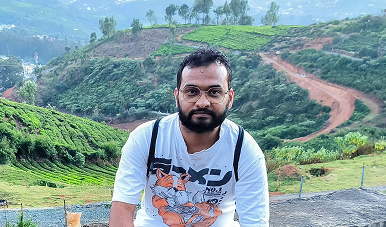
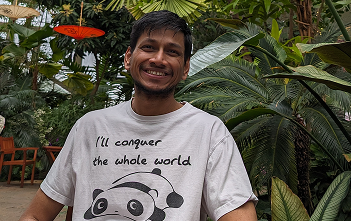
Payam Kavousi is a Staff Software Engineer, Machine Learning, on Veeam Data Cloud’s Intelligence team. Since joining in March 2025, he has helped turn an ambitious idea into a production-bound ransomware detection service—designing the ML-driven architecture that distinguishes real attacks from normal backup behavior, so customers can be alerted with confidence and minimal false positives.
What was your career path so far?
I'm a Staff Software Engineer, Machine Learning (ML) at the Veeam Data Cloud Intelligence team at Veeam. I joined in March 2025 and have been focused on threat detection capabilities for VDC ever since.
I originally came to the US from Iran in 2012 to pursue a PhD, then moved into industry ML roles, most recently as Lead ML Engineer at Logic20/20 building large-scale AI/ML systems for enterprise clients, including wildfire prediction models.
Veeam has been a genuinely exciting place to work. The engineering quality is high, the problems are real, and the team is aligned. One way I like to describe it: people's vectors are all pointing in the same direction, and everyone is genuinely pulling toward the same goals.
What were you excited about working on this project?
Working on threat detection at the scale of Veeam: the breadth of the data plane, the real-world stakes, and the chance to apply ML where it genuinely matters. The intersection of machine learning and cybersecurity felt like exactly the kind of problem I wanted to be working on.
What were you unsure about at the start?
The technology stack was quite different from what I knew. My background was on AWS with Terraform and AWS CDK, while Veeam's threat detection platform runs on Azure with Pulumi. The Azure ecosystem (Event Hubs, ADLS Gen2, Cosmos DB, Container Apps) was new territory, and that was the bigger adjustment alongside stepping from general anomaly detection into the cybersecurity domain.
When did this stop being an idea and become an urgent problem to solve?
When I realized we could detect ransomware within the data that Veeam backs up for customers. Ransomware can be patient; some strains quietly infiltrate systems and encrypt data over days or weeks before the attack becomes visible, while others strike fast. Because Veeam continuously backs up customer data over time, that progression leaves a trail in the backup history. We can analyze backup data across time windows to catch signs of compromise that other detection layers may have missed. That realization made the problem feel both urgent and uniquely valuable.
How does it feel to work on challenges that are so new to the industry?
Grounding. It makes the engineering feel purposeful rather than purely technical. There is a clarity that comes from knowing the work connects directly to customers facing these threats right now.
What is one decision or piece of work you personally drove that changed the outcome in a meaningful way?
Architecting the ransomware detection service. The challenge was designing a system that could reliably distinguish genuine ransomware activity from normal backup behavior, with high enough confidence to alert customers without flooding them with false positives. That required thinking carefully about how different signals work together and how the system learns what normal looks like before it starts flagging anomalies. Getting that balance right, and seeing it move toward production, was deeply satisfying.
What gave you autonomy?
Trust and clear goals. My manager and tech lead gave me real ownership of the ML architecture without micromanaging the approach. Knowing what we were optimizing for, detection accuracy and production readiness, gave me enough direction to move confidently without needing sign-off on every decision.
How did you collaborate with your team on this project?
Ransomware detection takes a village. The ML model is one piece, and shipping it meant collaborating broadly: working with teammates who had API expertise to build the threat posting mechanism, implementing the AI consent check to ensure only opted-in customers are processed, aligning with the infrastructure team on secure global data handling, the UI team on surfacing detections, and the backup engine team on data contracts.
A moment that stood out: a product manager shared firsthand how much customers were asking for threat detection. That perspective, which does not come from within the technical team, changed how I thought about prioritization on the ML side.
What did it feel like to work on such new technology?
Challenging and rewarding. When you're working on something genuinely new, the answer isn't always in a blog post. You have to reason from first principles, experiment, and rely on the people around you.

You will solve problems where the playbook does not exist yet, alongside genuinely strong engineers who will push your thinking.
Payam Kavousi
Staff AI Engineer, Veeam Data Cloud - AI Engineering
What did you have to learn fast?
Azure. It replaced the cloud platform I knew well, and I had to rebuild that fluency quickly while simultaneously ramping up on the threat detection domain. Veeam provided both internal and external resources that helped me ramp up quickly. Beyond that, a mix of self-directed learning, hands-on experimentation, and close collaboration with my tech lead and teammates made a real difference.
How did this project change you as an engineer?
I had end-to-end experience before joining Veeam, but not at this scale. Shipping a product that runs across multiple regions worldwide is a different challenge entirely. It pushed me to think more carefully about reliability, data residency, and infrastructure in ways I had not encountered before.
This project also rounded me out as a software engineer more broadly. I worked across the full stack, from ML modeling and cloud infrastructure to API design, streaming pipelines, and observability, and got much more comfortable operating at the intersection of all of them rather than staying in any one lane. I also grew in communicating technical work to non-technical audiences; writing the ransomware detection white paper pushed that skill significantly. And I became more comfortable moving fast with less certainty, which is something you can only develop by living it.
The thing I will carry into every future project: thinking about the customer impact of every technical decision.
What unique opportunities does Veeam give strong engineers?
You will get to build systems that protect real customers at enterprise scale, not toy problems. You will work across the full stack: cloud infrastructure, streaming pipelines, APIs, and intelligent detection, owning meaningful pieces end to end. You will ship products used across multiple regions worldwide.
What makes the work meaningful to you?
Ransomware costs enterprises billions of dollars. The damage is real, and detecting it earlier has direct, measurable consequences. I can draw a line between the code I write and a customer being protected, and that makes the engineering feel purposeful in a way that is hard to replicate.
Cross-team collaboration often goes unacknowledged in engineering organizations. We have a recurring monthly feedback session that extends beyond our immediate team to recognize everyone who helped us ship, facilitated through an internal recognition-dedicated platform. Having a structured space for that sends a signal that the work people do to support each other matters.
What do you like to do in your free time?
My daughter keeps me and my wife well occupied, and playing with her is one of the great joys of my life. Colorado has been an incredible place to live; I love hiking, fly fishing, and hunting out here. And when I get competitive, you will find me at a backgammon board.
Ready to make a difference and work on projects that really matter? Join us and apply here - our impact starts now!
Jobs for you
Find your fit. Discover roles where bold ideas, real impact, and career-defining growth come together.
Related content
-

-
Early Careers Ready to start your career? Learn more about our Early Careers opportunities.
-
Corporate Functions Learn more about working in Corporate Functions team at Veeam.
-
Join Us in Romania Join our Bucharest hub and shape the future with the #1 global leader in data resilience.
-
Sales Learn more about working in Sales team at Veeam.
-
Growth Explore what Growth at Veeam could look like for you.
-
Building Impact as an Engineer A Senior Platform Engineer in Pune shares how driving data resilience, innovation, and mentoring makes a real impact at scale.
-
Inclusion We believe in hiring the best people from all walks of life. Learn more about Inclusion at Veeam.
-
Culture Our company culture is important to us. Learn more about how we work at Veeam.
-
Benefits Learn more about our company benefits at Veeam.
-
Join Us in Czechia Be part of the 700+ Veeamers in Czechia driving global innovation in data resilience.
-
Platform Engineer Interview Guide Learn the Veeam interview process for Platform Engineer role, including screening, technical assessment, and final interviews.
-
Backend Developer Interview Guide This guide outlines what to expect and how to bring your best self throughout the interview process.
-
Technology Learn more about working in Technology team at Veeam.
-
C# Developer Interview Guide This guide outlines what to expect and how to bring your best self throughout the interview process.
-
Join Us in Germany Help enterprises across Germany protect what matters most - their data.
-
Empowering Future Tech Talent Hands-on cyber resilience and AI skills reach students across India, helping young talent build future-ready careers.
-
Explore our hubs in India. We’re hiring sales and tech talent across India to go fearlessly forward with the #1 global leader in data and AI trust company.
-
Sales Career Growth at Veeam Loredana's journey shows how sales roles at Veeam offer growth, new challenges, and mentor support from contributor to leader.
-
From Junior to Market Leader Alicja’s story highlights how curiosity, smart career moves, and a supportive team can accelerate progression in sales roles.
-
Join Us in Costa Rica Explore a range of exciting career opportunities at Veeam, where you can apply your skills, make a meaningful contribution, and unlock your full potential.
-
Starting a Career in Tech Sales Bianca’s story shows how onboarding, mentorship, and learning by doing can help you break into tech sales and grow with confidence.
-
Engineers Building AI Impact A Staff Software Engineer shares how owning a core consent system helped shape trusted AI features and real impact at scale.
-
Join Us in the United States Discover innovative hub where you can advance your career, drive business growth, and be part of a team shaping the future of AI.
-
Site Reliability Career Path Discover tech career growth at Veeam through the eyes of a Senior Site Reliability Engineer. Join a supportive, innovative team.
-
Middle-Senior C# Interview Guide Learn the Veeam interview process for Middle-Senior C# Developer roles, including screening, technical assessment, and final interviews.
-
Securiti AI Explore a variety of job opportunities across different roles, locations, and teams.
-
AI Engineering Careers at Veeam Engineers interview on building new AI tech with tight collaboration.
-
Veeam Internship Program Explore the Veeam Internship Program, offering hands-on experience across diverse teams including Engineering, Marketing, AI, and more.
-
Veeam ViBE Scholarship Program Learn how Veeam invests in education and creates pathways for the next generation of talent.
-
From SDR to Enterprise SDA Discover Allison Elizondo’s transformative journey and learn how she earned international recognition as a VX Trailblazer.
-
Working in Tech at Veeam Prague Denisa Keblová traded journalism for UX design and now leads Veeam Prague's design system and AI prototyping.
-
Dmytro’s Journey at Veeam Poland Learn how his diverse experience prepared him for a impactful tech sales role.
-
From Self-Taught Coder to Front End Developer at Veeam Discover how Dominik Jasek landed a role as a Front End Developer at Veeam Czech Republic.
-
Learning Golang and Launching a Product in Five Months Discover how Fatma Begum transitioned from infrastructure and automation to product engineering at Veeam India.
-
Inside a System Reliability Engineer Role at Veeam An inside look at troubleshooting, monitoring, and problem-solving as a Veeam SRE in Bucharest.
-
Using AI in Job Search & Interviews Discover how our interview process stays human-led — and how you can put AI to work while you research, prep and apply.
-
SDR and Sr. SDR Interview Guide - Costa Rica See what to expect in SDR and Sr. SDR interview rounds in Costa Rica.
-
SDR Interview Guide - EMEA and APJ See what to expect in SDR interview rounds in EMEA and APJ.
-
Veeam Earns Great Place To Work Certification™ 83% of Veeamers say Veeam is a great place to work. See what employees have to say about life at Veeam.
-
Join Us in Poland We’re hiring sales and tech talent across Poland to go fearlessly forward with the #1 global leader in data and AI trust company.
-
Uncapped Commissions in a Fast-Growing Bucharest Team Loredana joined Veeam Bucharest to sell into Africa, inspired by a sales leader she admired.
-
From Teaching French to Leading Sales at Veeam Bucharest Inside Sales Rep Mihai Platon moved from teaching French to sales at Veeam, becoming a multi-time MVP.
-
From Acquisition to AI Innovator at Veeam Abhay joined Veeam via acquisition and built an AI skills framework used team-wide.
-
Annual ESG Report Veeam Releases Annual ESG Report Highlighting Progress Across Environment, Social, and Trust
-
Mika Yamamoto Appointed as Chief Marketing and Customer AI Officer Seasoned business leader will lead global marketing and own the AI framework.
-
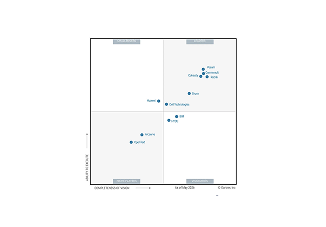
Veeam Marks a Decade as a Leader Named Highest in Ability to Execute for the 7th straight time and a Leader for the 10th time in a row
-
The Power of Shared Curiosity Alexandru shares how curiosity and collaboration shape his technology career at Veeam.
-
Perspectives Move Us Forward Discover how heritage, curiosity and different perspectives shape one sales leader’s experience.
-
Inside Sales at Veeam See how uncapped commission, customer focus and team support shape an inside sales career in Bucharest.
-
Scaling Security at Veeam USA See how one Technical Program Manager uses AI to bring a fast-growing global security team onto one way of working.
-
Veeam is Great Place To Work® Certified™ in Romania Hear from sales employees about the people, career growth and work experience they value at Veeam Romania.





















Sign up for job alerts
Don't see what you’re looking for? Sign up and we'll notify you when roles become available.
Sign Up